중국 Bipolar Membrane Electrodialysis 제조업체 및 공장 | Hfsinopower.com
다른

이온 교환막 용액

이온 교환막 용액

Bipolar Membrane Electrodialysis

Bipolar Membrane Electrodialysis

Bipolar Membrane Electrodialysis

Introduction
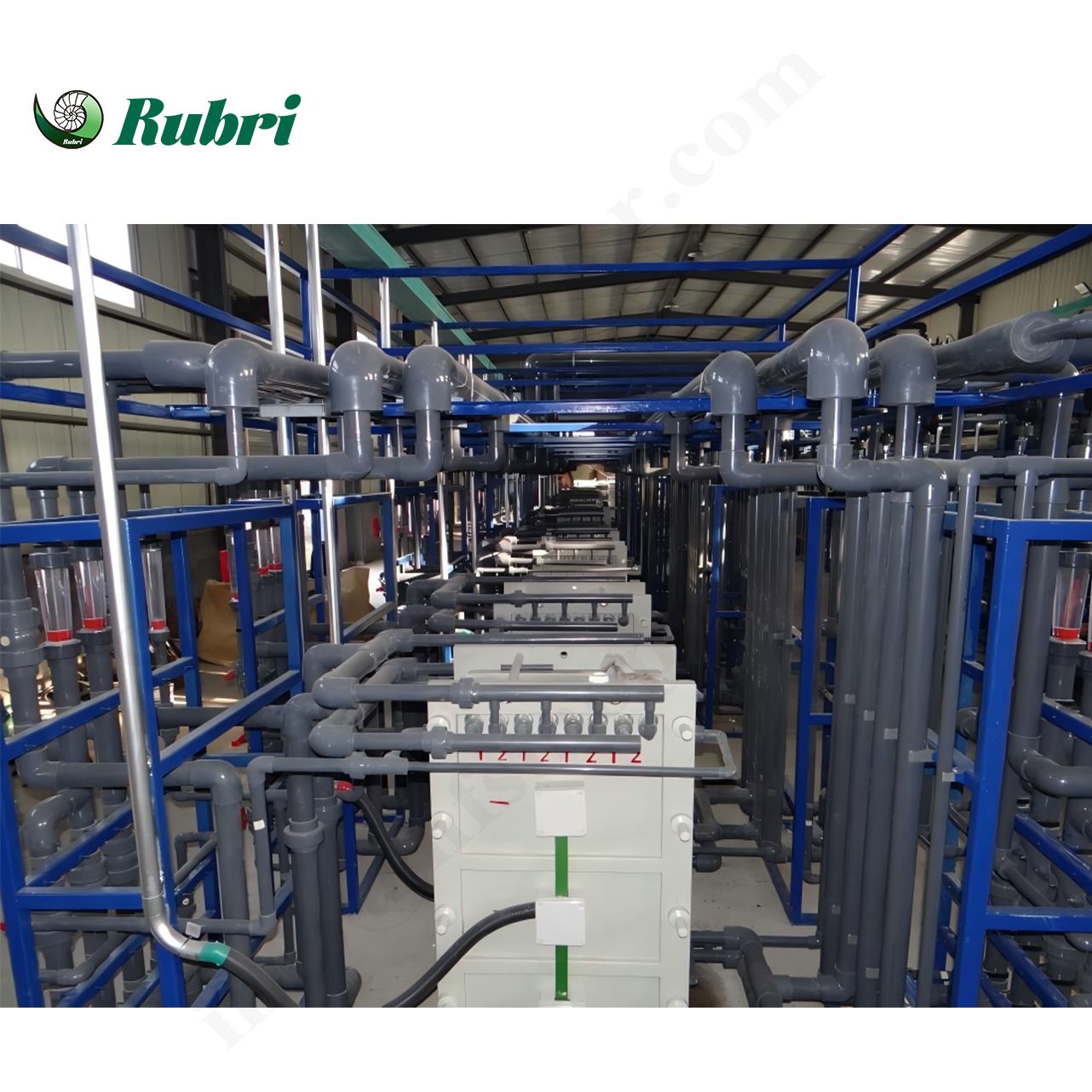
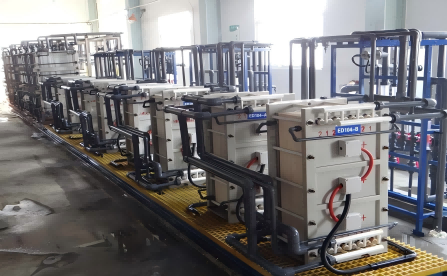
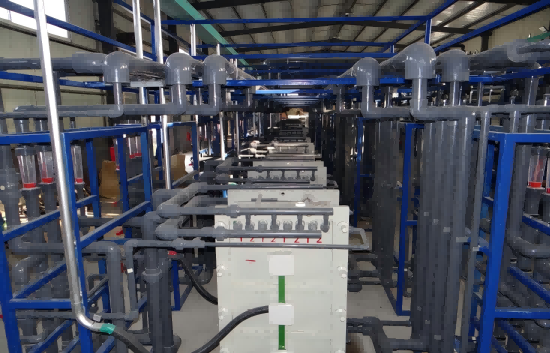
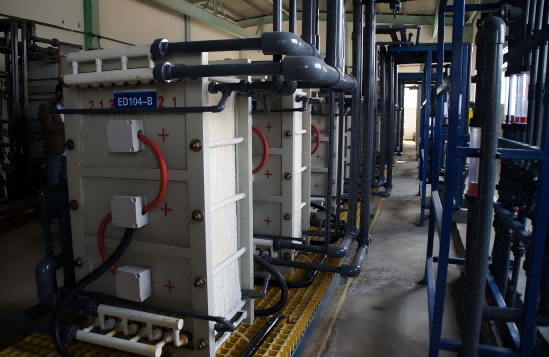
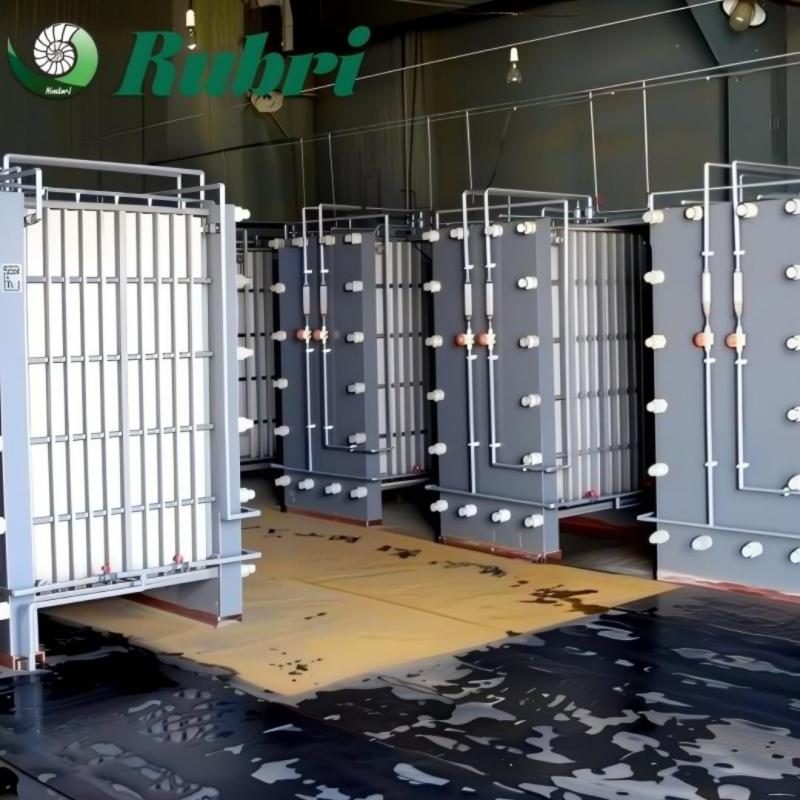
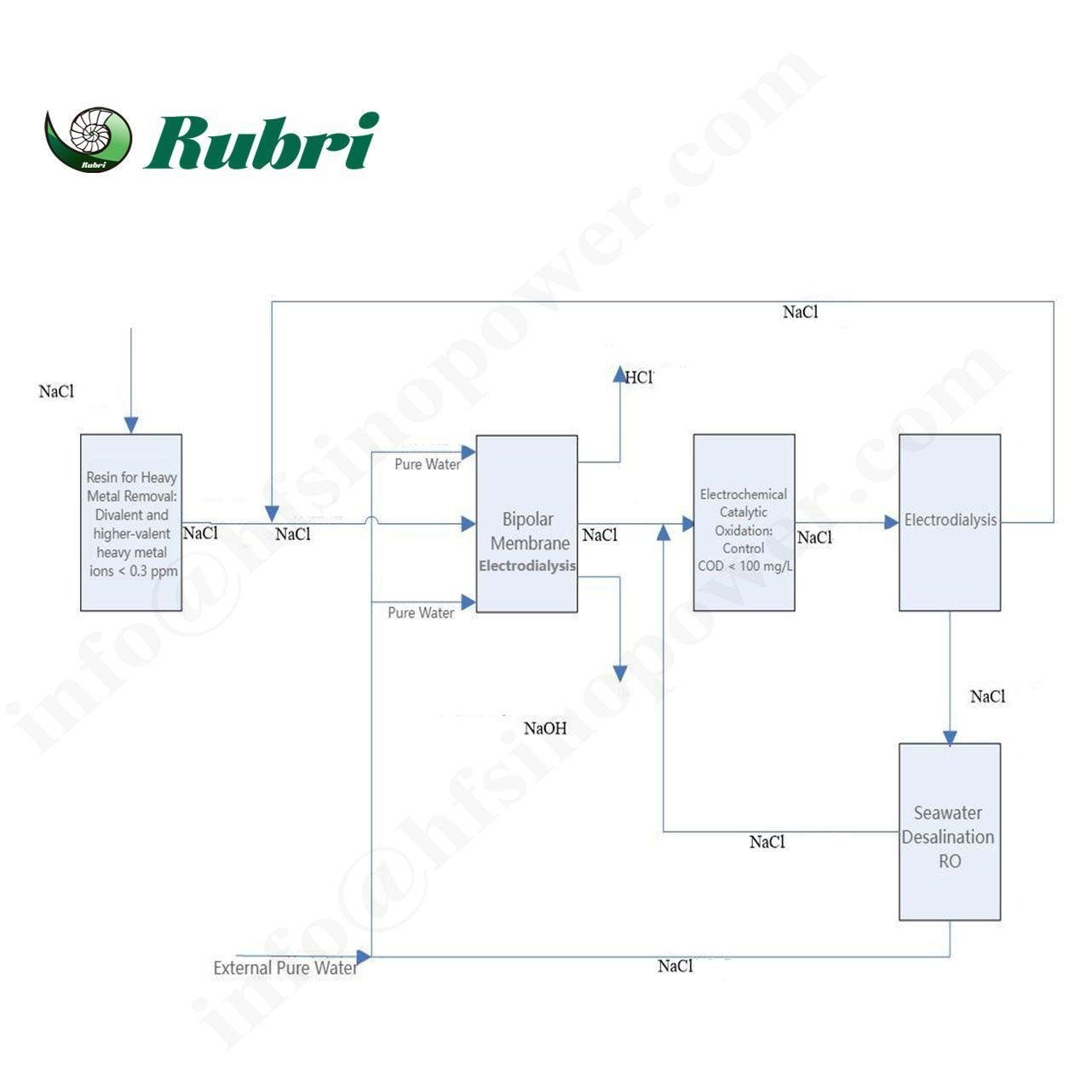
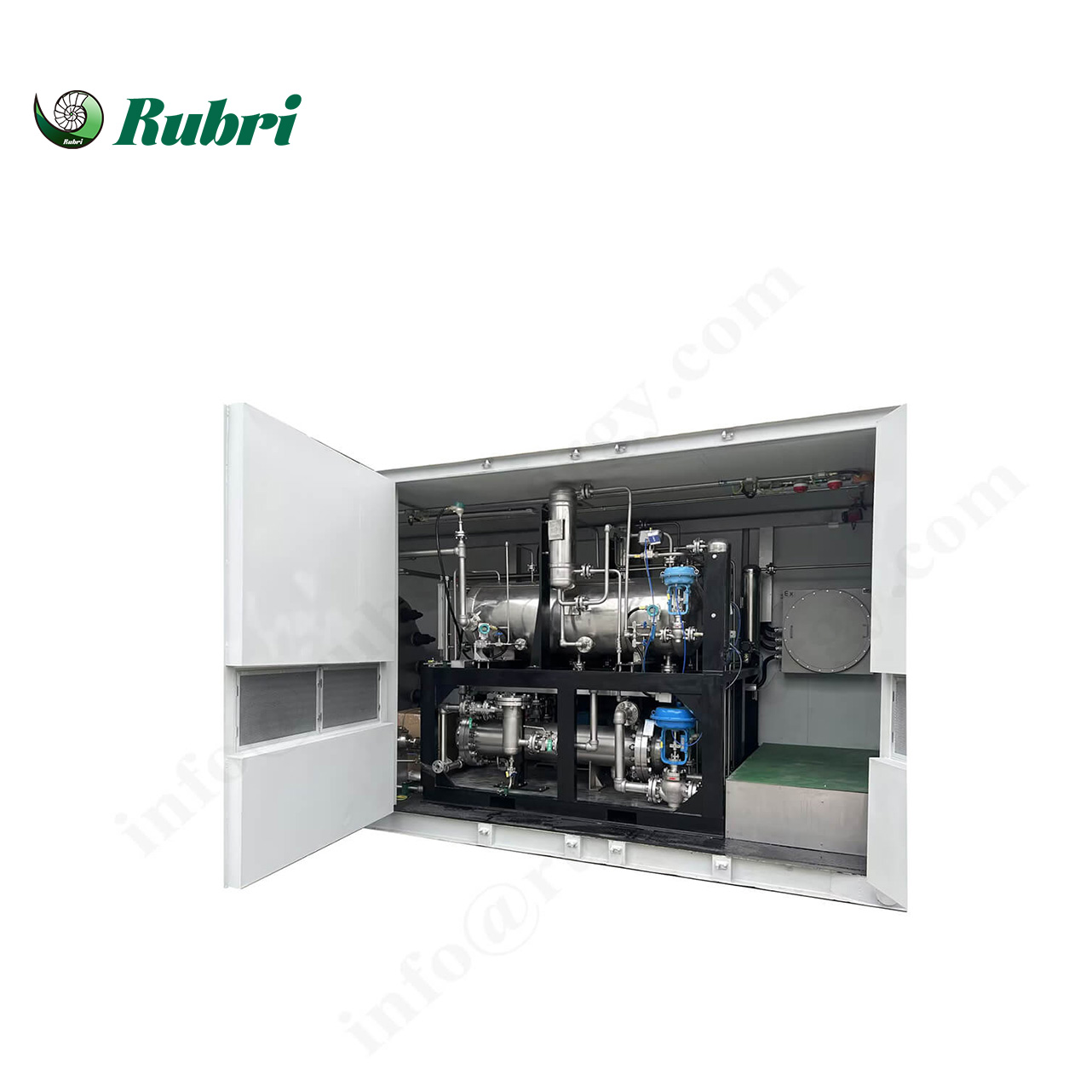
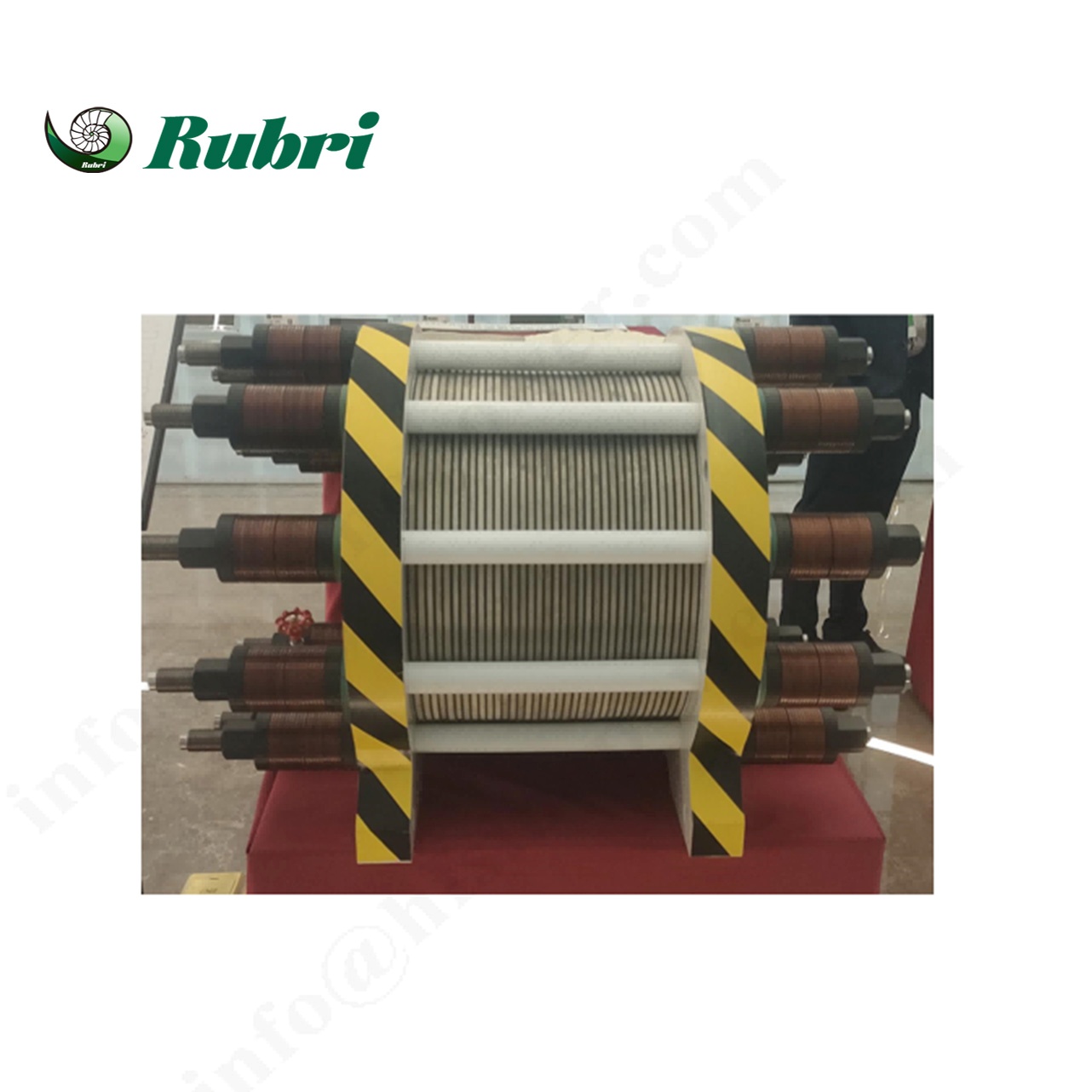
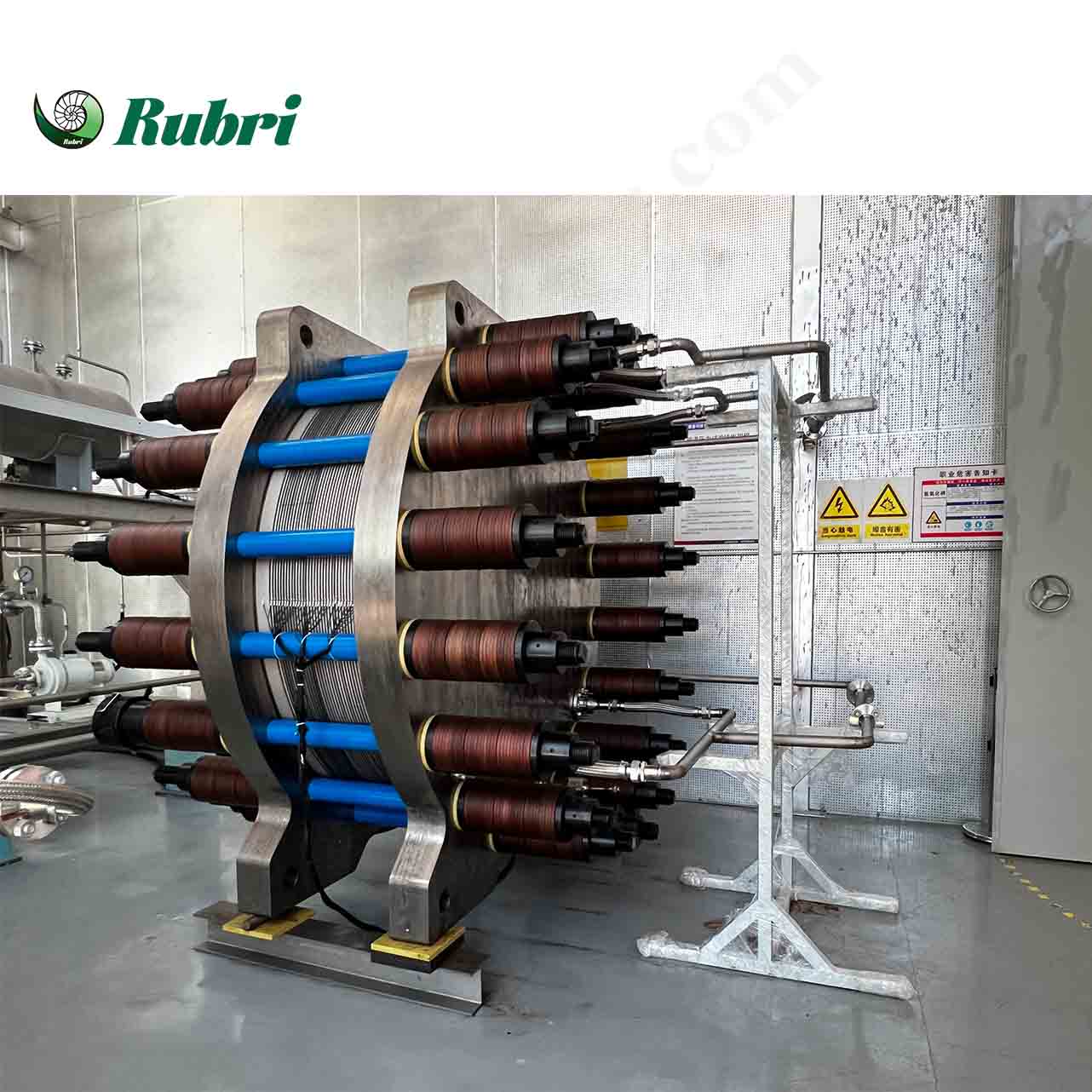
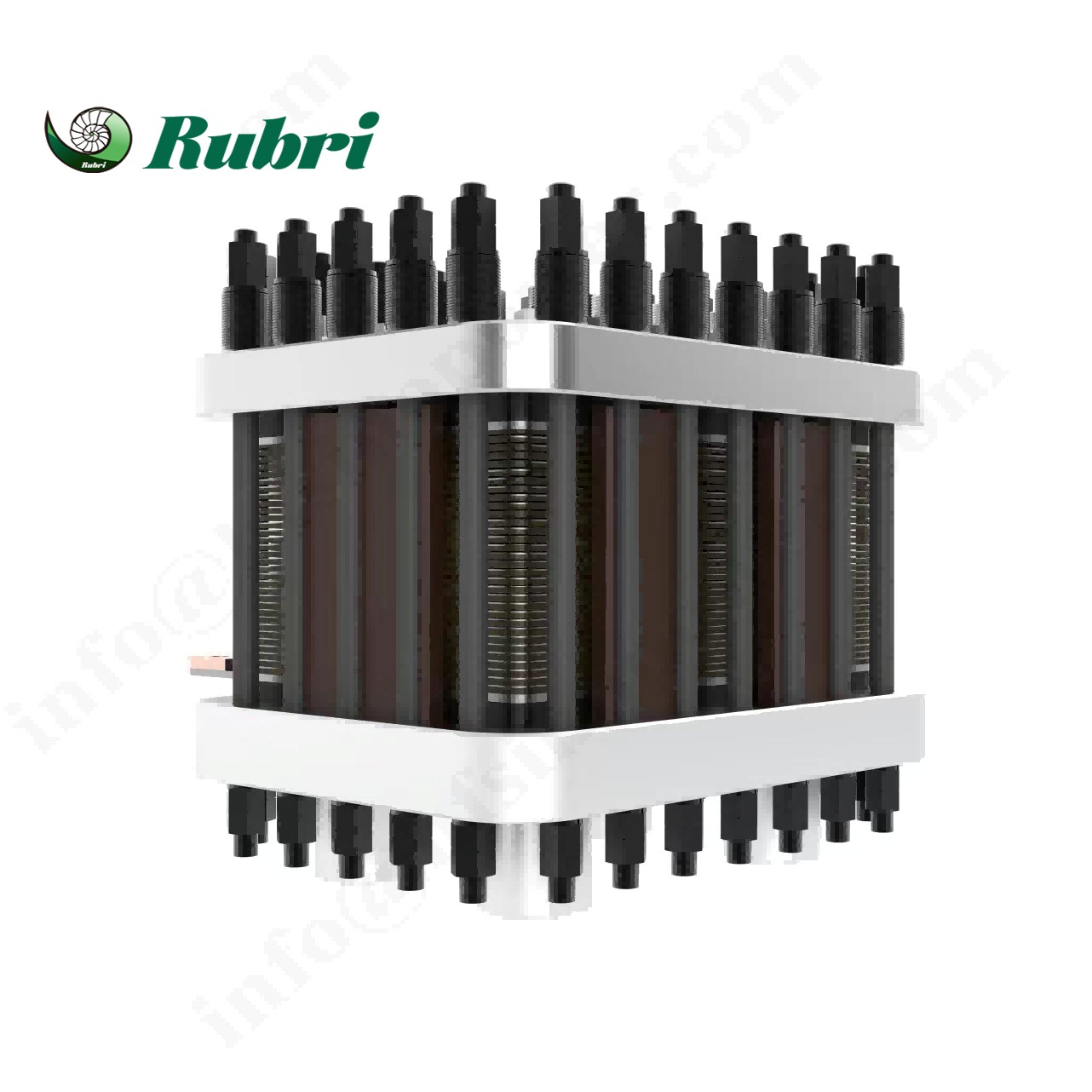
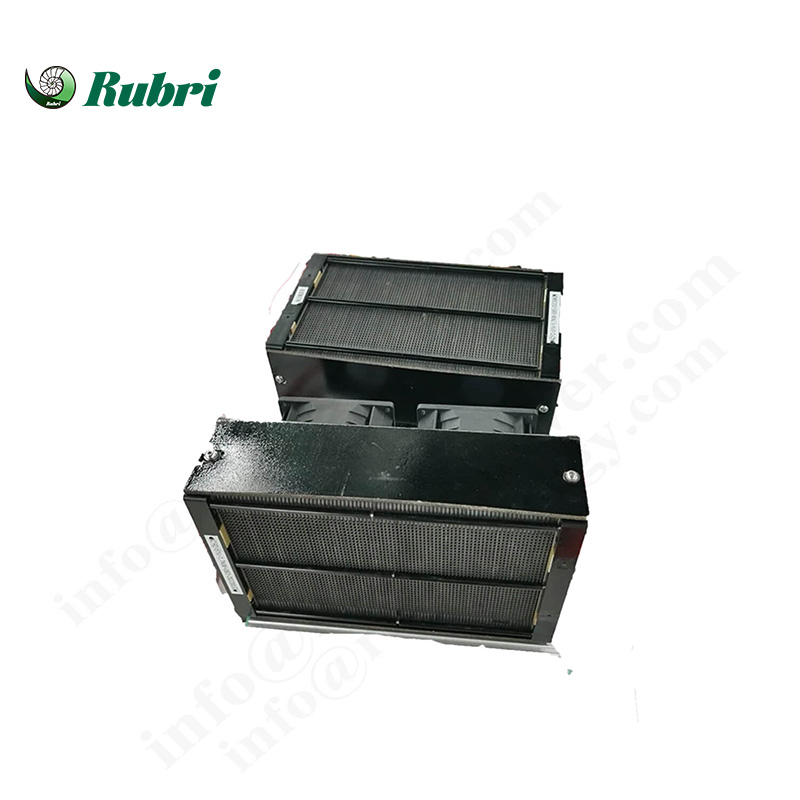
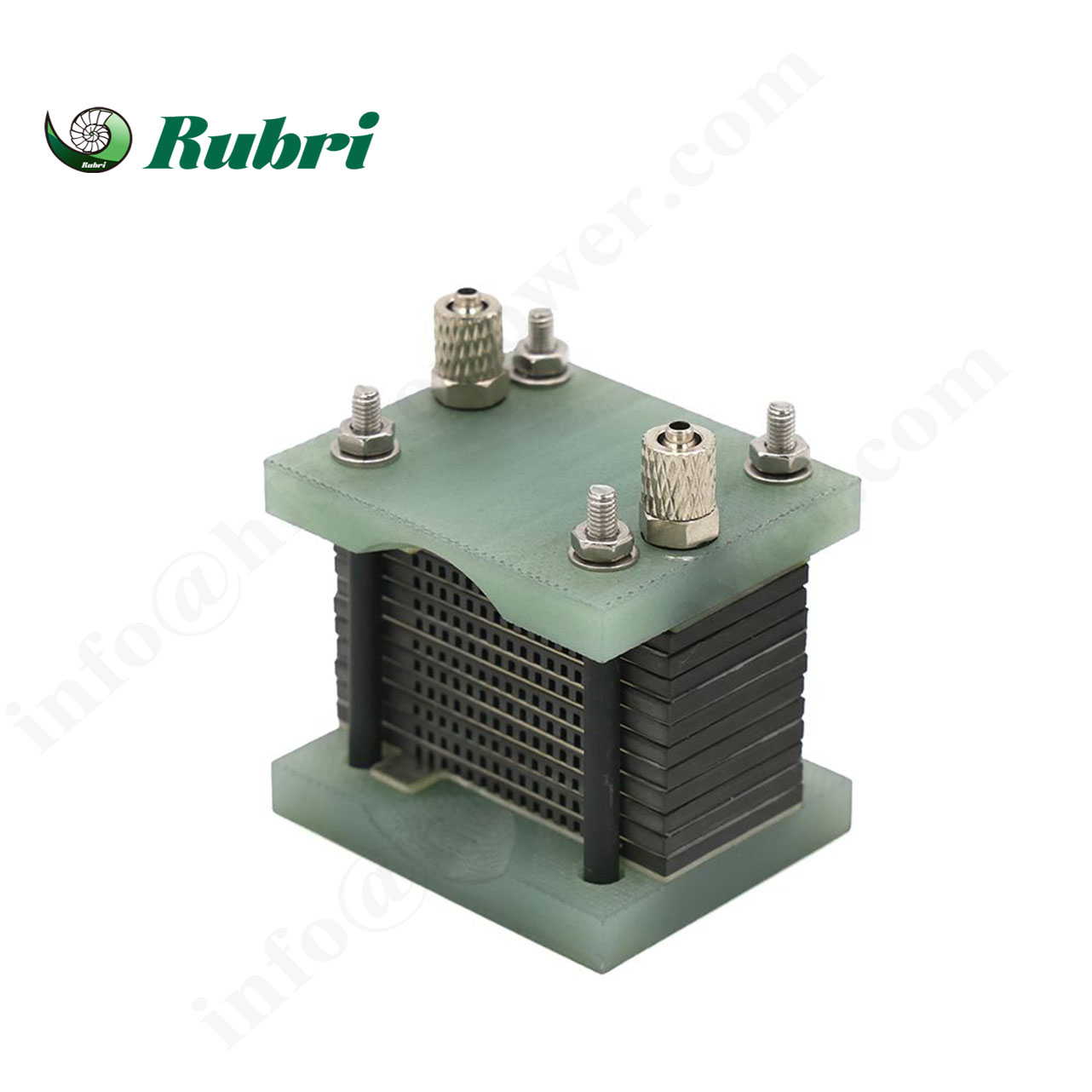
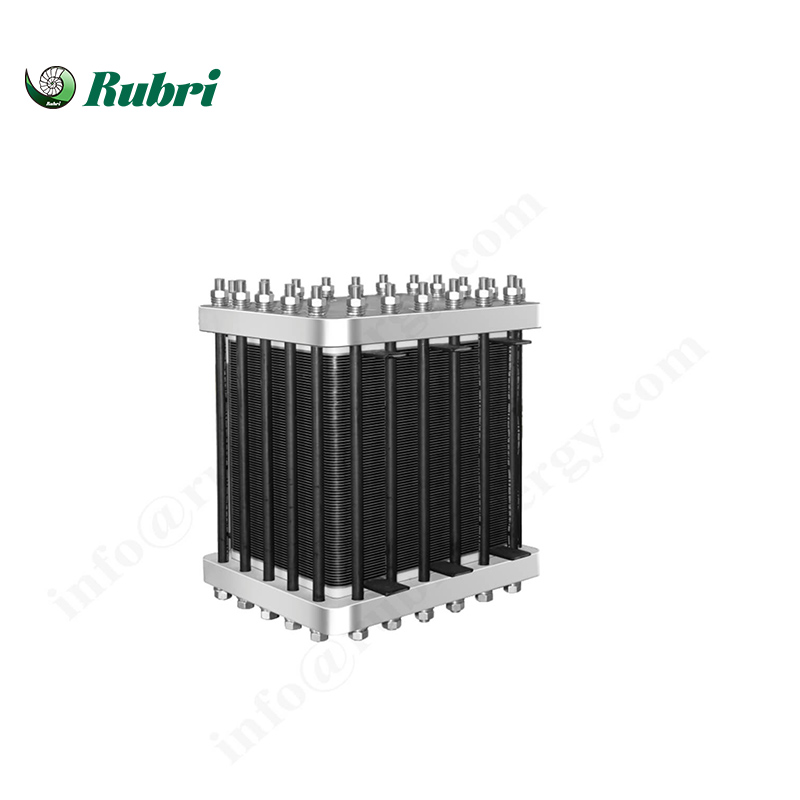
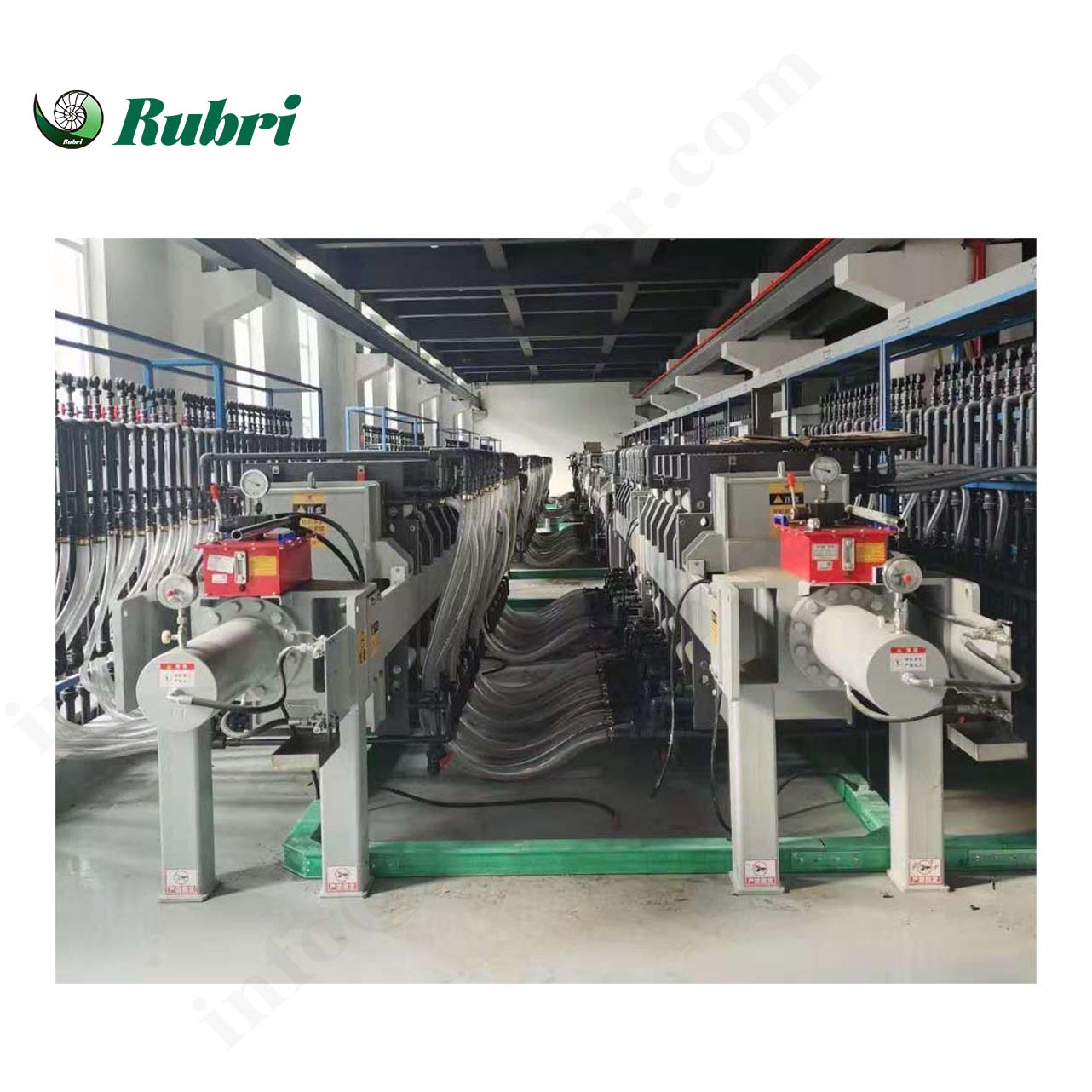
Bipolar Membrane Electrodialysis (BMED) is an advanced electrochemical separation technology that utilizes a specialized membrane stack to directly convert salts into their corresponding acids and bases. The core component is the bipolar membrane (BPM), which consists of a cation-exchange layer and an anion-exchange layer laminated together. Under the influence of a direct current (DC) electric field, the BPM catalyzes the dissociation of water molecules at its junction, producing H⁺ and OH⁻ ions. These ions migrate through the membrane stack to react with the anions and cations from a salt feed solution, thereby generating acid and base products simultaneously.

신제품
  • 제품 세부 정보

System Configurations

BMED systems are primarily categorized based on their cell-pair design:

Two-compartment system: The simplest configuration, consisting of alternating bipolar and monopolar (either anion or cation) exchange membranes. It is compact and energy-efficient but may yield products with lower purity.

Three-compartment system: This is the most widely used industrial configuration. It features a repeating unit of a bipolar membrane (BPM), a cation-exchange membrane (CEM), and an anion-exchange membrane (AEM), creating three distinct compartments: a central salt compartment, an acid compartment, and a base compartment. This design ensures high product purity and efficient separation.

Multi-compartment systems: These more complex designs (e.g., four or five compartments) are employed for specialized applications requiring the separation of multiple ionic species or for achieving very high concentration gradients.

Key Advantages

 BMED offers several compelling benefits over conventional chemical processes:

Green and Sustainable Process: The technology requires no addition of external chemicals (like strong acids or bases for neutralization). Its primary input is salt and water, and its main outputs are acid and base, resulting in a closed-loop, near-zero liquid discharge process.

High Product Purity: BMED can produce high-purity acids and bases. For instance, it is capable of manufacturing electronic-grade lithium hydroxide (LiOH) without sodium contamination, which is critical for battery applications.

Resource Recovery and Valorization: It transforms waste salts (e.g., NaCl, Na₂SO₄, Li₂SO₄) from industrial effluents into valuable acid and alkali products, turning a disposal problem into an economic opportunity.

Energy Efficiency and Cost-Effectiveness: Operating at ambient temperature and pressure, BMED has lower energy consumption compared to thermal processes like evaporation or the traditional causticization method for LiOH production. The operational costs are primarily electricity and equipment depreciation.

High Yield and Selectivity: The process is highly selective and can achieve near-quantitative yields. In LiOH production, for example, lithium loss is minimal, leading to a recovery rate of over 99%.

Major Applications

BMED technology has found diverse and impactful applications across various industries:

Organic Acid/Alkali Production: It efficiently converts organic acid salts (e.g., sodium lactate, sodium citrate, sodium gluconate, amino acid salts) directly into their free acid forms. Similarly, it can regenerate organic bases like desulfurization amines and ionic liquids without introducing extraneous cations.

Brine and Waste Salt Resource Utilization: In place of energy-intensive evaporation and crystallization that generates solid waste, BMED converts inorganic salts from industrial wastewater into reusable HCl/NaOH or H₂SO₄/NaOH, solving both waste and raw material procurement issues.

High-Purity Chemical Synthesis: A flagship application is the production of battery-grade lithium hydroxide from lithium sulfate brines. The process yields high-purity LiOH and sulfuric acid as co-products, with significant advantages in quality, yield, and environmental footprint.

Environmental Remediation & Circular Economy: BMED is integral to zero-liquid-discharge (ZLD) schemes in sectors like electroplating, rare earth processing, and food & pharma, where it enables the recovery of valuable chemicals from complex waste streams.

Pharmaceutical and Food Industries: The technology is used for the gentle purification and concentration of heat-sensitive compounds like vitamins, amino acids, and other bio-based products, preserving their integrity.

메시지를 남겨주세요
당사 제품에 관심이 있고 자세한 내용을 알고 싶으시면 여기에 메시지를 남겨주시면 최대한 빨리 답변해 드리겠습니다.

관련 상품

Bipolar Membrane Electrodialysis

IntroductionBipolar Membrane Electrodialysis (BMED) is an advanced electrochemical separation technology that utilizes a specialized membrane stack to directly convert salts into their corresponding acids and bases. The core component is the bipolar membrane (BPM), which consists of a cation-exchange layer and an anion-exchange layer laminated together. Under the influence of a direct current (DC) electric field, the BPM catalyzes the dissociation of water molecules at its junction, producing H⁺ and OH⁻ ions. These ions migrate through the membrane stack to react with the anions and cations from a salt feed solution, thereby generating acid and base products simultaneously.

더 읽어보기
D D
확산 투석액

루브리는 확산 투석 기술에 능숙하며, 맞춤형 솔루션을 설계하고 구현하는 데 능숙하여 고객에게 포괄적이고 친환경적인 생산 솔루션을 제공합니다.

더 읽어보기
BPED
양극성 막 전기투석 용액

루브리는 양극성 막 전기투석 기술에 능숙하며, 맞춤형 솔루션을 설계하고 구현하는 데 능숙하여 고객에게 포괄적인 친환경적이고 깨끗한 생산 계획을 제공합니다.

더 읽어보기
균일 이온 교환막
균일 이온 교환막

전기투석의 핵심 원리전기투석 기술의 핵심은 전기장과 선택적 막 기술의 결합에 있으며, 구체적인 원리는 크게 두 부분으로 나뉩니다.1. 직류 전기장의 구동 효과직류 전기장의 작용으로 용액 속의 음이온과 양이온은 방향성을 가지고 이동합니다. 양이온은 음극 쪽으로 이동하고, 음이온은 양극 쪽으로 이동합니다.2. 이온 교환막의 선택적 여과 효과이 시스템에서는 이온 분리를 위해 두 종류의 이온 교환막이 사용됩니다.양이온 교환막: 양이온(예: Na+)만 통과시킵니다.+, 칼슘2+마그네슘2+음이온은 차단하면서 통과시킵니다.음이온 교환막: 음이온(예: Cl⁻)만 통과시킵니다.-, 그래서42-양이온을 차단하면서 통과시킵니다.

더 읽어보기
Highly Customized Bipolar Membrane Electrodialysis for Raw Material Recovery from Electroplating Wastewater

This technology is based on the principle of bipolar membrane electrodialysis. Under the action of a direct current electric field, it utilizes bipolar membranes to efficiently dissociate water molecules into hydrogen ions and hydroxide ions. This process then directionally converts salts in electroplating wastewater (such as sodium chloride, sodium sulfate, etc.) into corresponding acids (such as hydrochloric acid, sulfuric acid) and alkalis (such as sodium hydroxide), achieving the dual objectives of wastewater purification and resource recovery.

더 읽어보기
Based on Ion-Selective Membrane Acid Recovery Solution

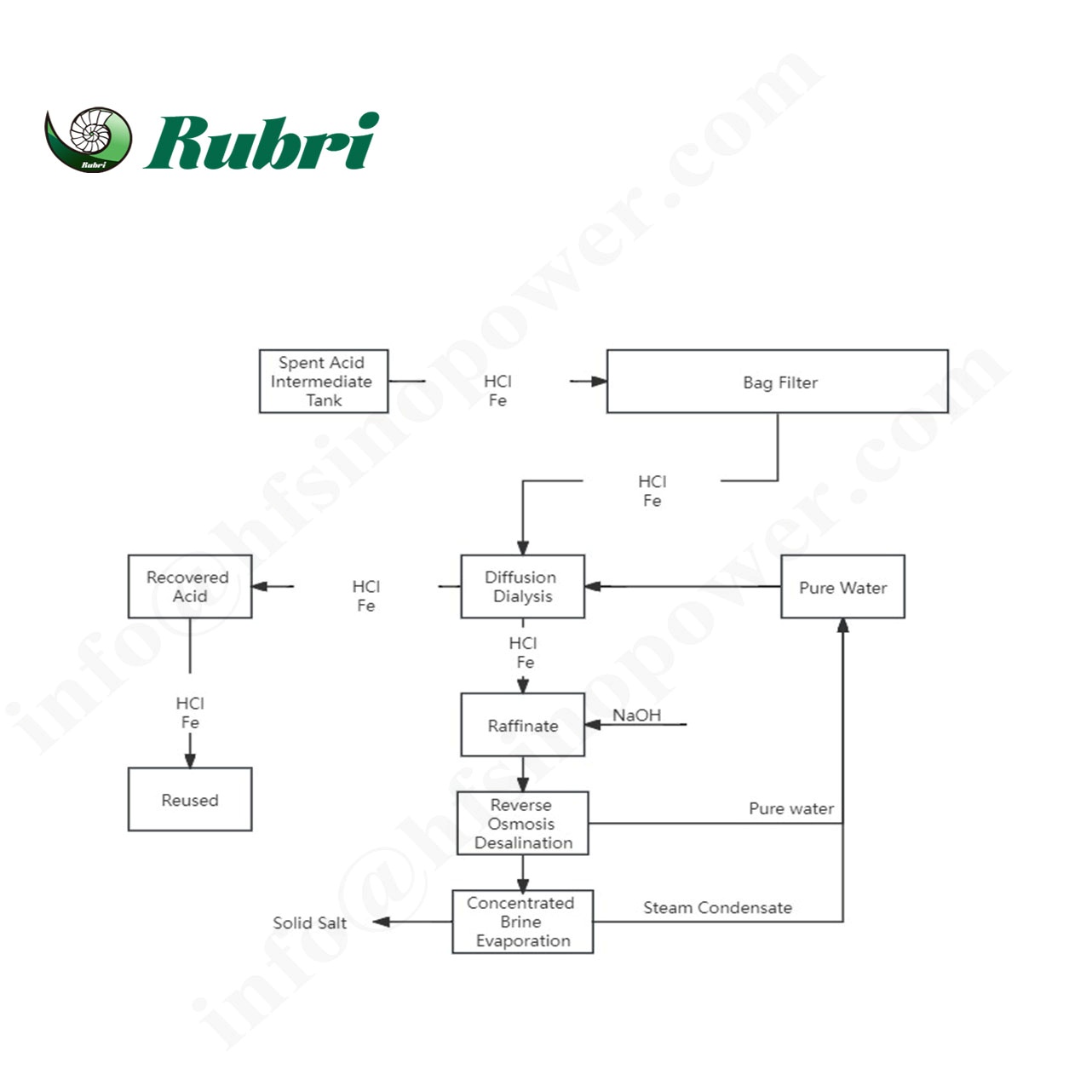
Core Principle of Electrodialysis The core of electrodialysis technology lies in the combination of electric field and selective membrane technology. Its specific principle is divided into two parts: Driving Effect of DC Electric Field and Concentration GradientUnder the action of a DC electric field or concentration gradient, anions and cations in the solution move directionally: cations migrate toward the negative electrode, while anions migrate toward the positive electrode; solutes move from high-concentration solutions to low-concentration ones. Selective Sieving Effect of Ion Exchange MembranesTwo types of ion exchange membranes are used in the system to achieve ion separation: Cation Exchange Membrane: Only allows cations (e.g., Na⁺, Ca²⁺, Mg²⁺) to pass through, while blocking anions. Anion Exchange Membrane: Only allows anions (e.g., Cl⁻, SO₄²⁻) to pass through, while blocking cations.

더 읽어보기
Industrial Wastewater Treatment and Alkaline Recovery Electrodialysis Unit

Core Principle of Bipolar Membrane Electrodialysis (BPED) The core of BPED technology lies in the combination of electric field, selective membrane technology, and the unique water-splitting capability of bipolar membranes. 1. Driving Effect of DC Electric FieldUnder a DC electric field, ions migrate directionally: cations move toward the cathode, while anions move toward the anode. 2. Membrane Functions Bipolar Membrane (BPM): Splits water ( H2​O ) into H+ and OH− ions under the electric field, providing a source for acid and base production. Cation Exchange Membrane (CEM): Selectively allows cations to pass through. Anion Exchange Membrane (AEM): Selectively allows anions to pass through. By arranging these membranes alternately, salts can be converted into corresponding acids and bases.

더 읽어보기

메시지를 남겨주세요

당사 제품에 관심이 있고 자세한 내용을 알고 싶으시면 여기에 메시지를 남겨주시면 최대한 빨리 답변해 드리겠습니다.
제출하다

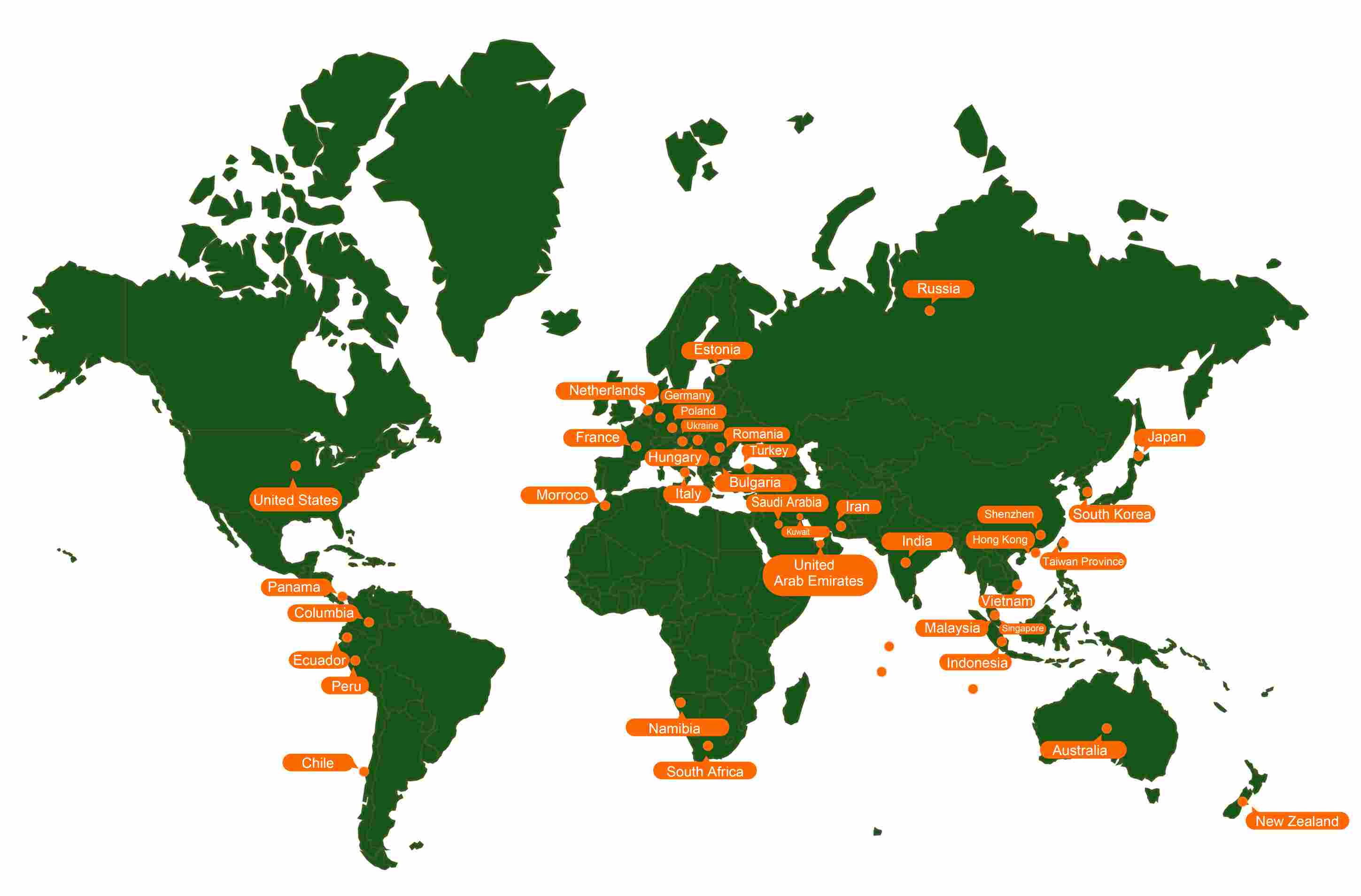
우리는 다음으로 수출했습니다.

우리는 다음으로 수출했습니다.

메시지를 남겨주세요

메시지를 남겨주세요
당사 제품에 관심이 있고 자세한 내용을 알고 싶으시면 여기에 메시지를 남겨주시면 최대한 빨리 답변해 드리겠습니다.
제출하다

제품

whatsApp

연락하다